Low-Maintenance Turf Care: 7 Easy Tips for Busy Homeowners
Blog, Health, House & Garden Jan 07, 2026
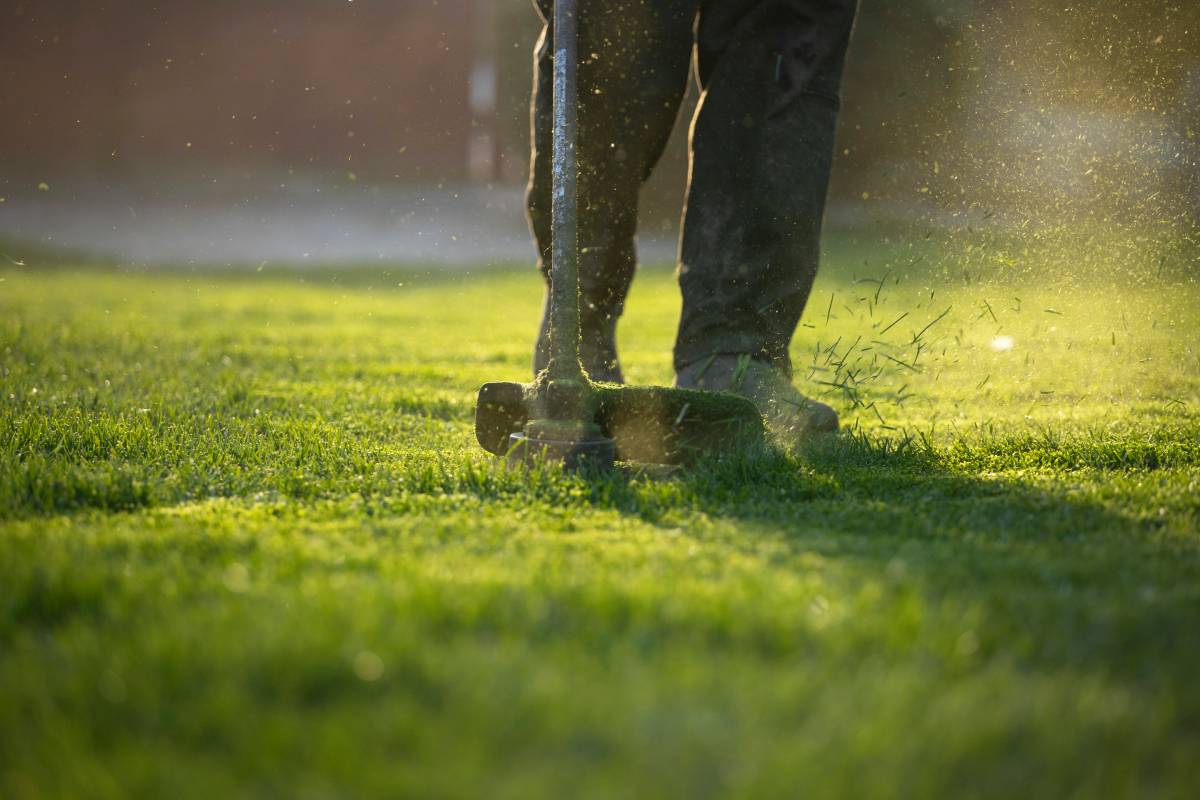
Let’s be honest: you didn’t invest in artificial grass because you love yard work. Maybe you spent years battling weeds and dry patches, constantly asking yourself, “What different grass should I use?“ before finally making the switch to synthetic.
You wanted the lush, green aesthetic of a manicured lawn without the sweating, mowing, and endless watering bill.
But here is the reality check. While synthetic turf is low-maintenance, it requires no maintenance.
If neglected, your investment can start to look flat, accumulate unpleasant odours (especially if you have pets), and lose that vibrant “freshly laid” look. Suddenly, the dream of a hassle-free yard feels like it’s slipping away, replaced by the fear that you’ve wasted thousands of dollars.
Here is the good news. You don’t need to become a full-time groundskeeper to fix this. By applying a few strategic, high-impact maintenance habits—the “80/20 rule” of turf care—you can keep your lawn pristine with minimal effort.
This guide covers exactly how to protect your investment without sacrificing your free time.
- The 5-Minute "Power Routine"
- Why "Low Maintenance" Doesn't Mean "Zero Maintenance"
- Tip 1: The Weekly Rinse Strategy
- Tip 2: Master the "Cross-Brush" Technique
- Tip 3: Pet Owners: Neutralise Odours Before They Stick
- Tip 4: Weed Control for Synthetic Lawns
- Tip 5: Handling Spills, Stains, and Accidents
- Tip 6: Preventive Measures Against Heat & Weight
- Tip 7: The Essential Tool Kit
- Conclusion
- Frequently Asked Questions (FAQ)
The 5-Minute “Power Routine”
How do you maintain artificial turf easily?
To keep synthetic grass looking new with minimal effort, follow this simple schedule:
- Weekly: Rinse the area with a hose to remove dust and pollen.
- Monthly: Brush fibres against the grain (cross-brushing) to prevent matting.
- Immediately: Rinse pet urine and spot-clean spills with mild soap.
- Seasonally: Top up infill sand to support the blades and ensure proper drainage.
- Annually: Apply a specialised turf weed killer to prevent barrier breaches.
Why “Low Maintenance” Doesn’t Mean “Zero Maintenance”
Before we dive into the tactics, it is crucial to understand why we are doing this. It is notoriously difficult to choose the best lawn for shaded areas where natural grass struggles to grow, which is why many homeowners turn to synthetic options.
However, your artificial lawn is still a system composed of the backing, the blades (fibres), and the infill.
Over time, foot traffic pushes the blades down. Debris clogs the drainage holes in the backing. If you ignore this, you risk water pooling and mould growth. However, by addressing these issues proactively, you extend the lifespan of your turf from 10 years to potentially 20+.
Tip 1: The Weekly Rinse Strategy
If you live in a dusty area or have high pollen counts, your bright green lawn can turn a dull grey surprisingly fast.
The Fix:
You don’t need a pressure washer (in fact, be careful with those—see the FAQ). A standard garden hose with a spray nozzle is your best friend.
- Spray down lightly once a week. This removes accumulated dust, dirt, and airborne pollutants.
- Target high-traffic zones. Focus on the path from the back door to the gate or the kids’ play area.
- Check drainage. While rinsing, watch for pooling water. This is an early warning sign that your drainage holes might be clogged with fine debris.
Pro Tip: If you live in an area with frequent rainfall, nature might do this job for you. Enjoy the free labour!
Tip 2: Master the “Cross-Brush” Technique
The biggest enemy of artificial grass aesthetics is matting. This happens when the fibres are walked on repeatedly and lie flat, making the turf look like an old rug rather than natural grass.
The Strategy:
You need to re-fluff the fibres. We call this grooming.
- Get a broom with synthetic bristles. Never use metal rakes; they will rip the turf backing.
- Brush “Against the Grain.” Look at which way the grass is leaning, and brush in the opposite direction. This forces the blades to stand upright.
- Redistribute the Infill. Brushing also helps move the sand infill around, ensuring the blades have support at the base.
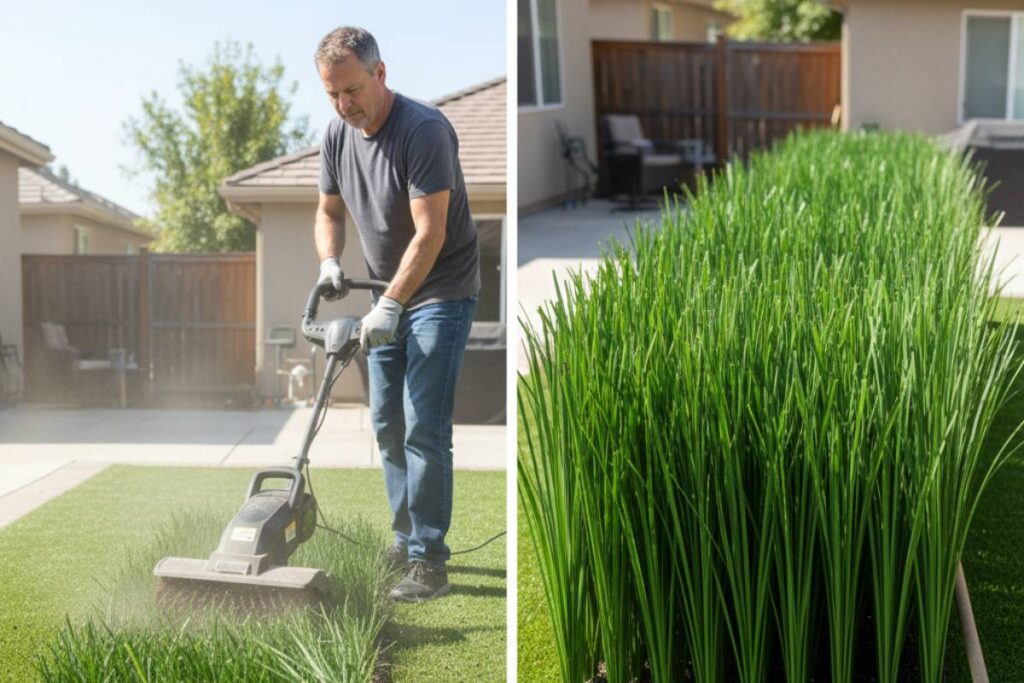
For larger yards, consider renting a power broom. It does the work of an hour of manual sweeping in about 10 minutes.
Tip 3: Pet Owners: Neutralise Odours Before They Stick
We know you love your furry friends, but their waste is the #1 cause of turf dissatisfaction. Unlike natural grass, soil doesn’t absorb and break down urine instantly. It can get trapped in the infill.
The Protocol:
- Solids: Scoop them up immediately. No waiting.
- Liquids: Rinse the spot with water as soon as possible to flush the urine through the drainage holes.
- The Secret Weapon: Use an enzyme-based turf cleaner.
Why Enzymes Matter:
Do not use harsh bleach. Enzymes (bacteria-based cleaners) actually “eat” the uric acid crystals that cause the smell. Spray a bio-enzymatic cleaner weekly if you have multiple dogs.

Tip 4: Weed Control for Synthetic Lawns
“Wait, I thought artificial grass didn’t get weeds?”
Technically, weeds cannot grow from the synthetic material. However, wind-blown seeds can nestle into the infill and sprout, or hardy weeds can grow around the edges near concrete borders.
How to Handle It:
- Hand Pulling: If you catch them early, they pull out easily because their roots can’t go deep.
- Water-Based Herbicide: Twice a year, spray a gentle weed killer. Ensure it is non-toxic if you have pets or kids.
- Check the Edges: This is where the weed barrier membrane is weakest. Keep an eye on the perimeter.
Tip 5: Handling Spills, Stains, and Accidents
BBQ sauce, wine, coffee, or sticky gum. Life happens on your lawn. The key here is speed.
| Stain Type | Cleaning Method |
| Everyday Spills (Soda, Coffee) | Blot with a paper towel, then rinse with warm water and mild soap. |
| Oily Stains (Sunscreen, Grease) | Use a tiny amount of mineral spirits on a cloth. Wipe gently. |
| Sticky Stuff (Gum, Sap) | Use an ice cube to freeze the gum, then scrape it off carefully with a plastic knife. |
| Pet Waste | Remove solids, rinse, and apply enzyme cleaner. |
Warning: Never use acidic cleaners or high-strength solvents (like acetone) as they can melt the plastic fibres.
Tip 6: Preventive Measures Against Heat & Weight
Did you know windows can melt your grass? Much like the factors you weigh when choosing an outdoor deck—such as heat retention and material durability—you need to be aware of how your turf interacts with its environment.
Window Reflection (The Magnifying Glass Effect): Energy-efficient Low-E windows can reflect concentrated sunlight onto your turf, reaching temperatures that actually melt the plastic.
- Solution: Install window screens or protective film on windows facing the yard.
Heavy Objects: Leaving a heavy wading pool or furniture in one spot for months can permanently crush the fibres.
- Solution: Rotate your furniture layout slightly every few months to allow the grass underneath to recover.
Tip 7: The Essential Tool Kit
Stop trying to improvise. Having these four tools in your shed makes maintenance a breeze:
- Stiff Bristle Broom (Synthetic): For grooming.
- Plastic Leaf Rake: For clearing leaves and twigs.
- Turf Rake / Power Brush: For deep cleaning.
- Bio-Enzymatic Cleaner: For odours.
Conclusion
Switching to artificial turf was a smart move for your lifestyle. It frees you from the drudgery of mowing and fertilising, giving you more time to enjoy your outdoor space.
By following this simple maintenance blueprint—rinsing weekly, brushing monthly, and managing pet odours promptly—you ensure your lawn remains a lush, inviting sanctuary for decades. Whether you have a standard lawn or a premium installation from Direct Turf, a little effort now prevents a massive cleanup job later.
What is the biggest challenge you face with your artificial lawn? Is it pet odours or flattening? Share your own tips on socials!